White Tailed Eagle
Haliaeetus albicilla
Species Details
Birds
- Family:
-
Accipitridae
- Origin:
-
Native (Reintroduced)
- Diet:
-
Fish, Birds, Small Mammals
Image Gallery
When to See Me

Spotting Tips
The white-tailed eagle (commonly known as the sea eagle) is the UK’s largest bird of prey. After being becoming extinct in the UK, conservation efforts that began in the 1970s have re-established populations around parts of the Scottish coastline - especially around the Hebrides.
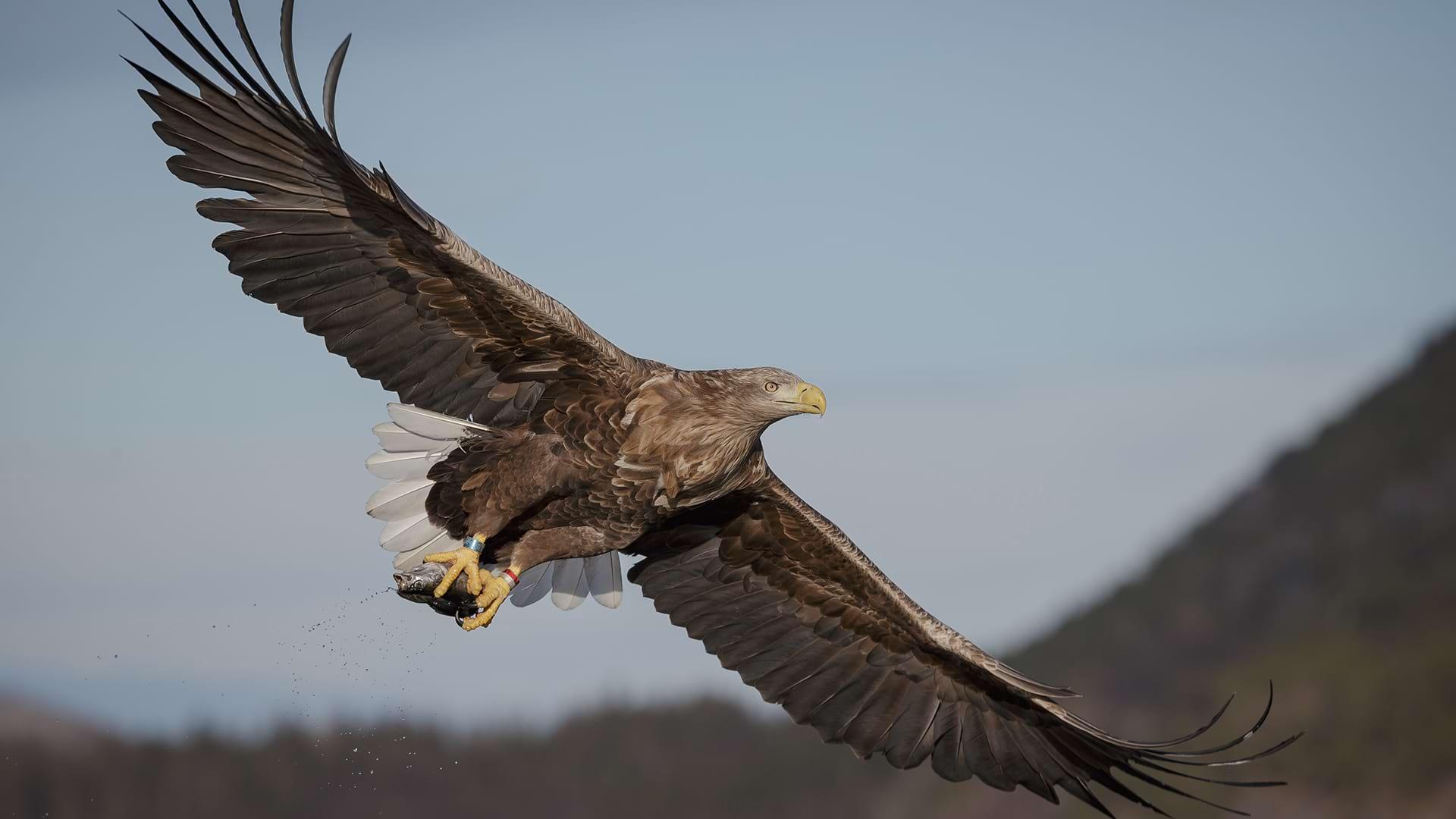
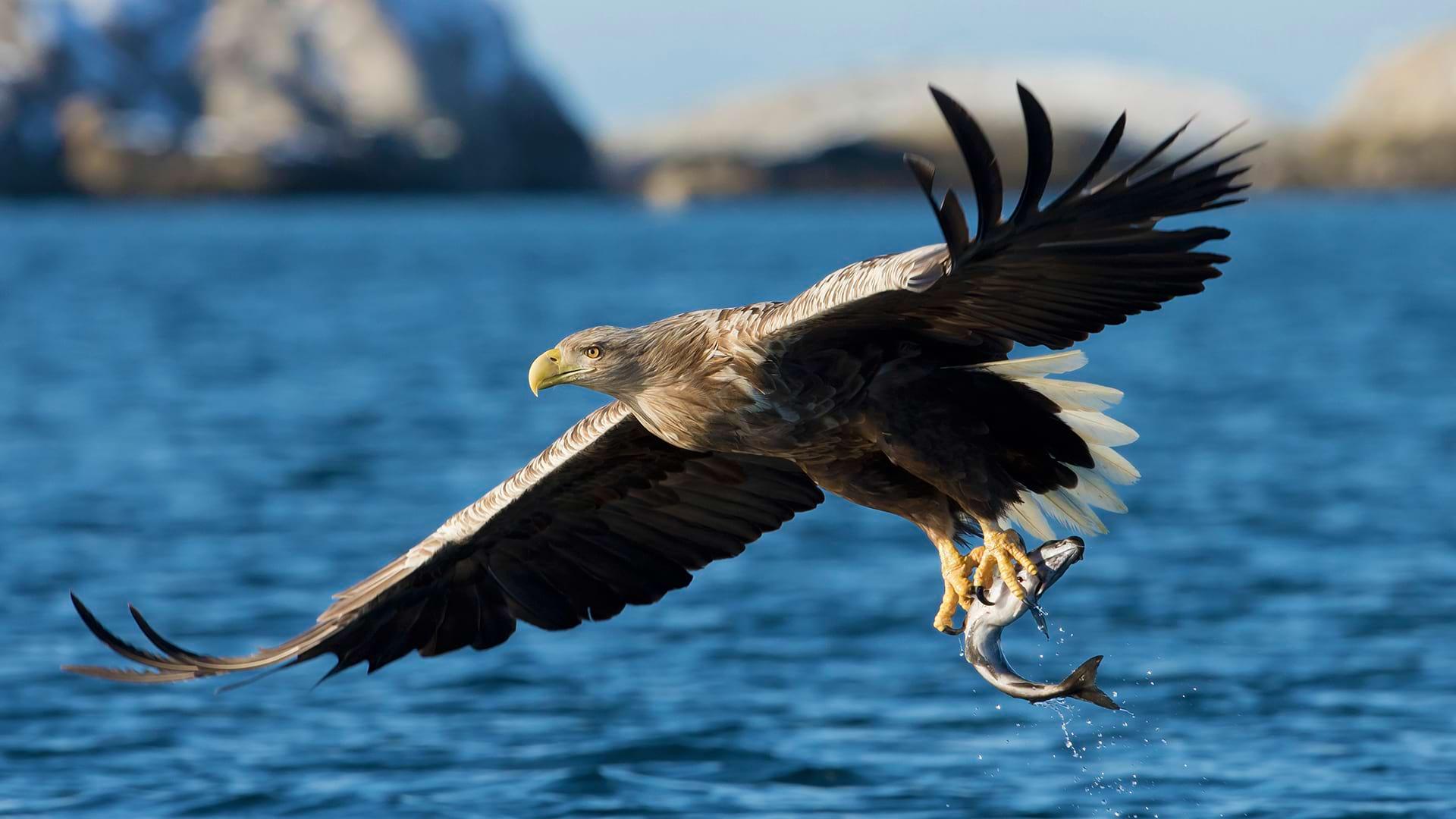
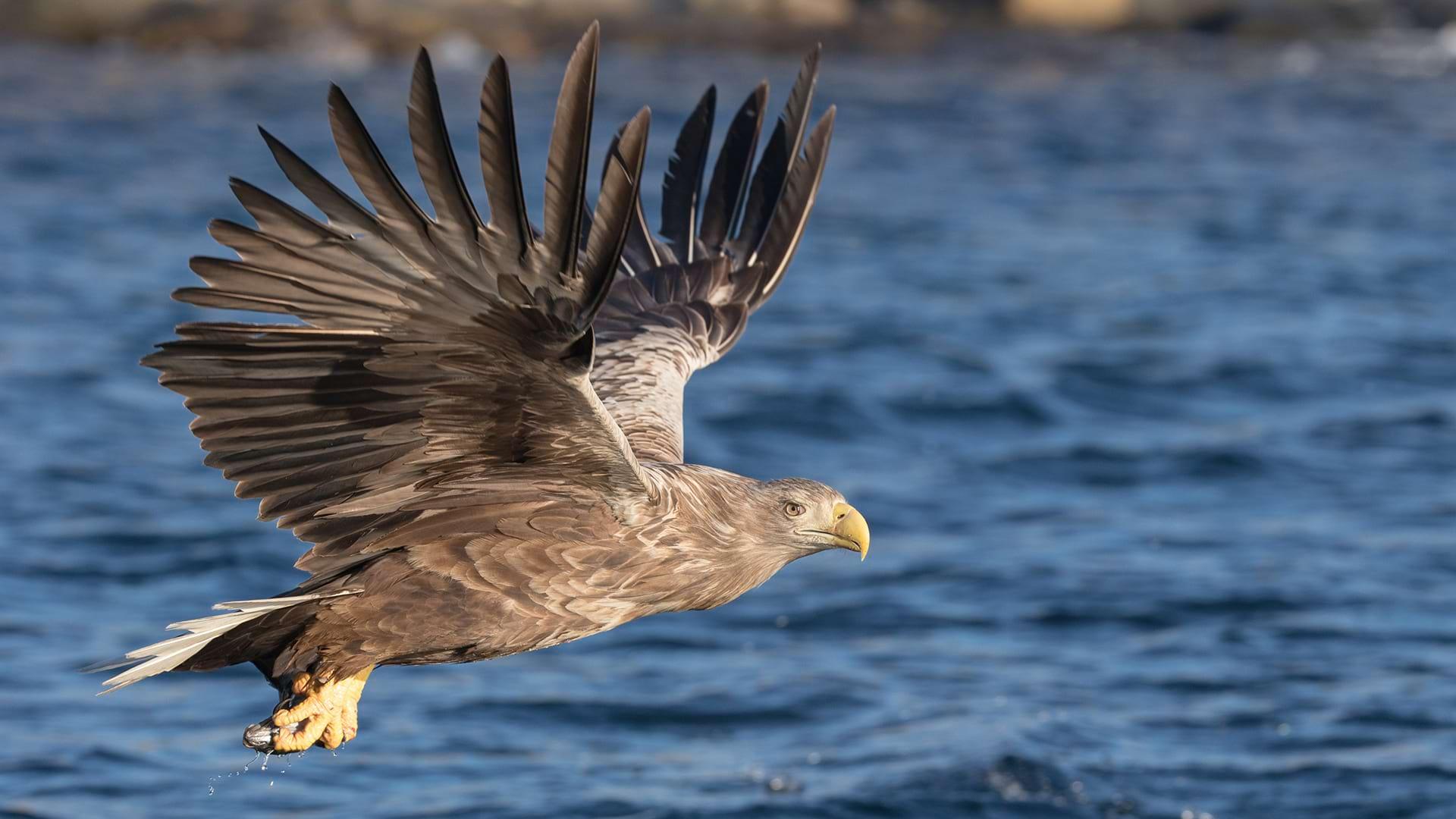
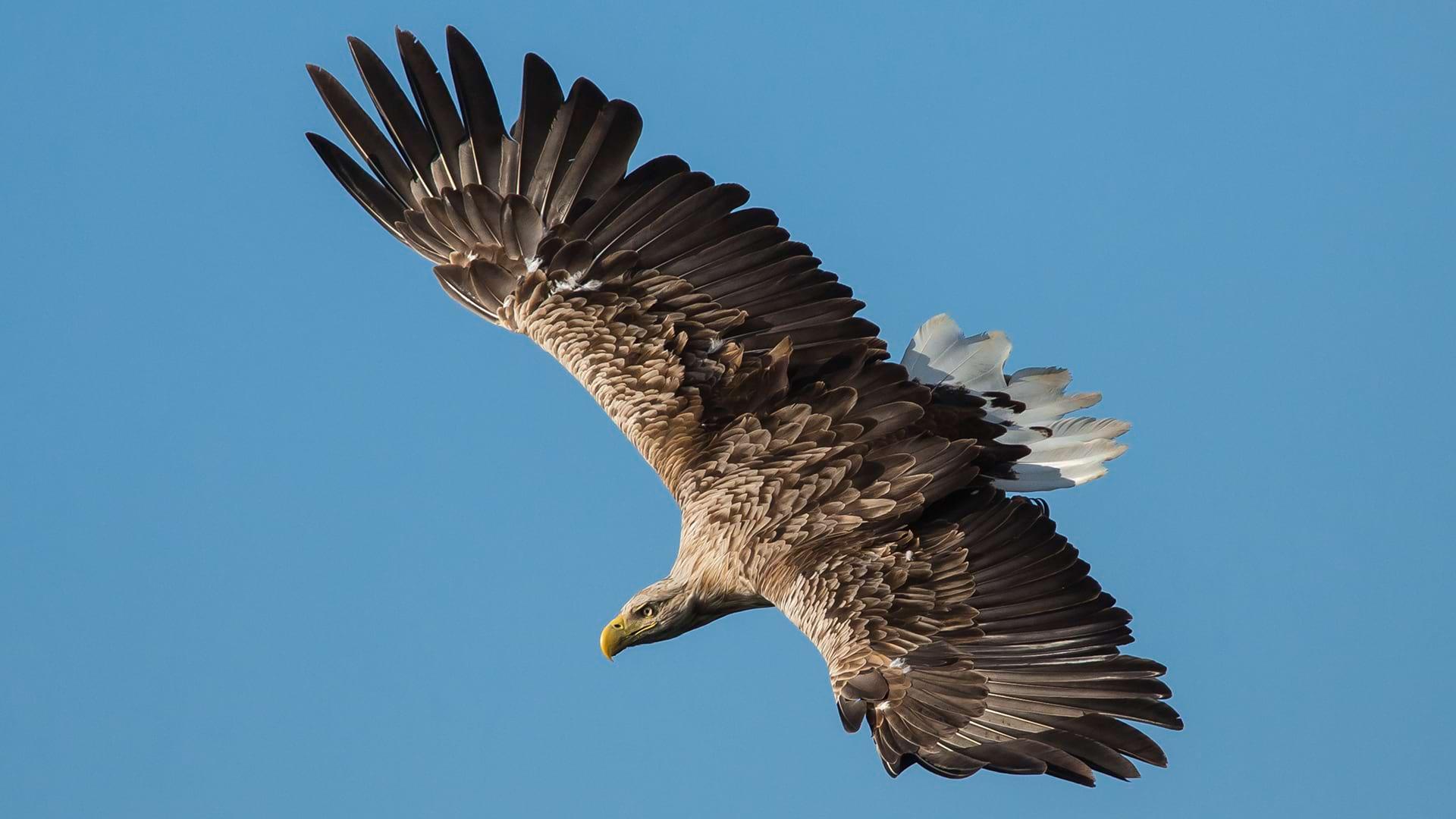
The sea eagle has brown body plumage with a pale head and neck, that can be close to white in more mature birds. Adult tail feathers are also white, making it easy to identify in flight. With a wingspan of up to 2.4m, and broad 'fingered' ends it creates an imposing silhouette that is particularly distinctive. The legs are yellow and unlike the golden eagle do not have ‘trousers’.
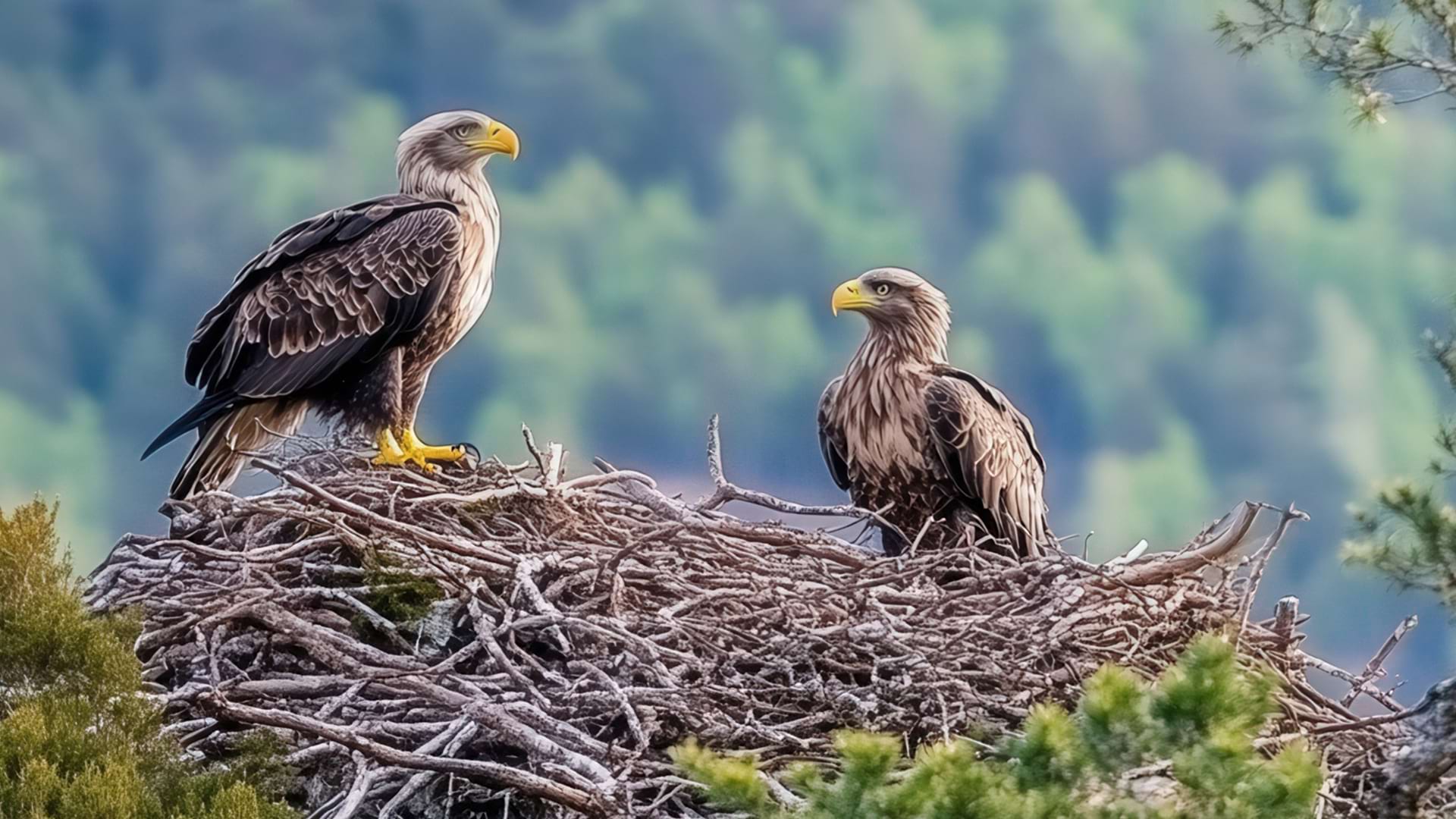
Adults are generally solitary, but stay together for life when they pair-up. Resident birds roost close to the nest for most of the year, although Juveniles have been known to gather in small groups. White-tailed eagles are diurnal and hunt from perches, using a patient ambush-style to attack their prey. Their diet consists primarily of fish and seabirds, but they also prey on small mammals such as rabbits and hares. During the winter months their primary food source is often carrion, leading to the fearsome reputation that originally contributed to their extinction in this part of the world.
What to look out for
- Brown body with pale head and neck (close to white in mature birds)
- Enormous, broad wings with fingered ends (much larger than Golden Eagle)
- Large (chunky) yellow beak and yellow feet (beak is dark in juveniles)
- White tail feathers on adults
- Soars with wings flat, unlike the ‘V’ shape of Golden Eagles
Where to Find Me
Learn More
White Tailed Eagle
Haliaeetus albicilla
Image Gallery
Species Details
Birds
- Family:
-
Accipitridae
- Origin:
-
Native (Reintroduced)
- Diet:
-
Fish, Birds, Small Mammals
The white-tailed eagle (commonly known as the sea eagle) is the UK’s largest bird of prey. After being becoming extinct in the UK, conservation efforts that began in the 1970s have re-established populations around parts of the Scottish coastline - especially around the Hebrides.
The sea eagle has brown body plumage with a pale head and neck, that can be close to white in more mature birds. Adult tail feathers are also white, making it easy to identify in flight. With a wingspan of up to 2.4m, and broad 'fingered' ends it creates an imposing silhouette that is particularly distinctive. The legs are yellow and unlike the golden eagle do not have ‘trousers’.
Adults are generally solitary, but stay together for life when they pair-up. Resident birds roost close to the nest for most of the year, although Juveniles have been known to gather in small groups. White-tailed eagles are diurnal and hunt from perches, using a patient ambush-style to attack their prey. Their diet consists primarily of fish and seabirds, but they also prey on small mammals such as rabbits and hares. During the winter months their primary food source is often carrion, leading to the fearsome reputation that originally contributed to their extinction in this part of the world.
What to look out for
- Brown body with pale head and neck (close to white in mature birds)
- Enormous, broad wings with fingered ends (much larger than Golden Eagle)
- Large (chunky) yellow beak and yellow feet (beak is dark in juveniles)
- White tail feathers on adults
- Soars with wings flat, unlike the ‘V’ shape of Golden Eagles